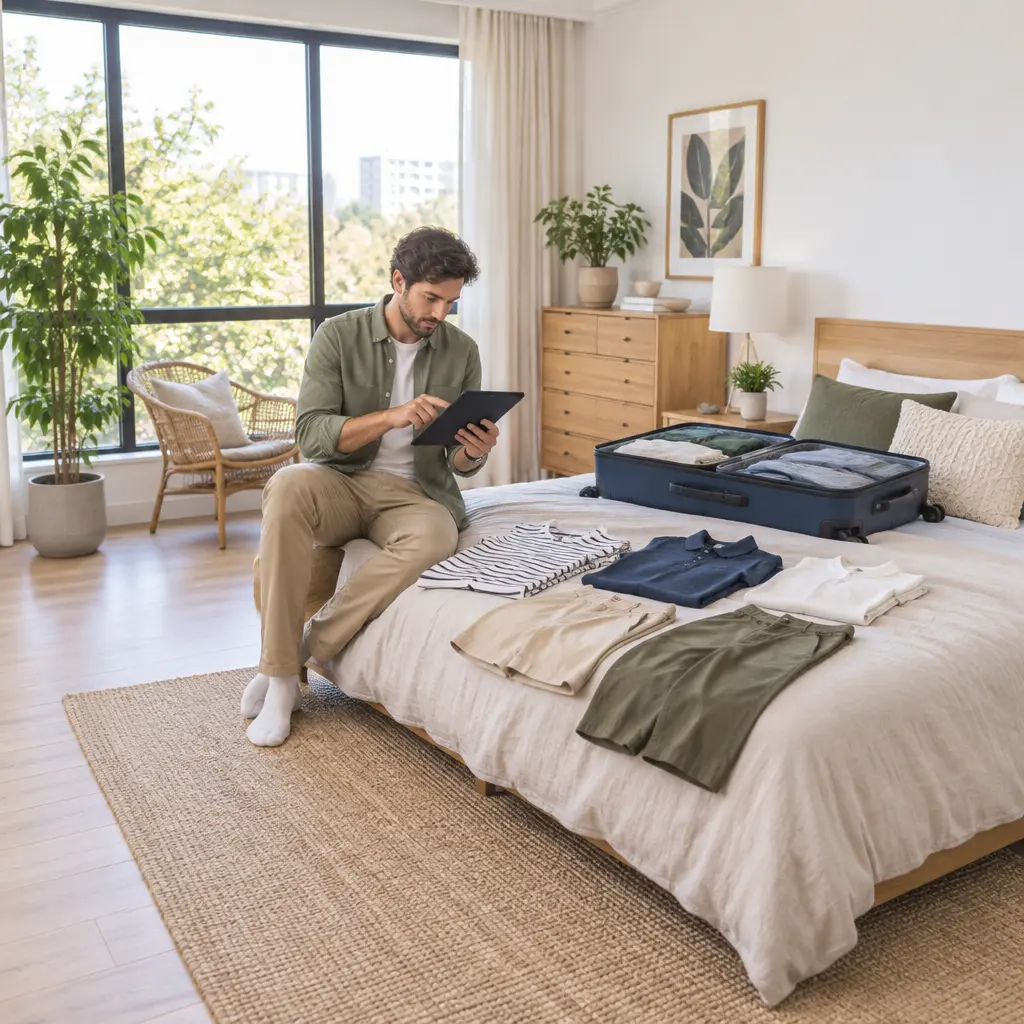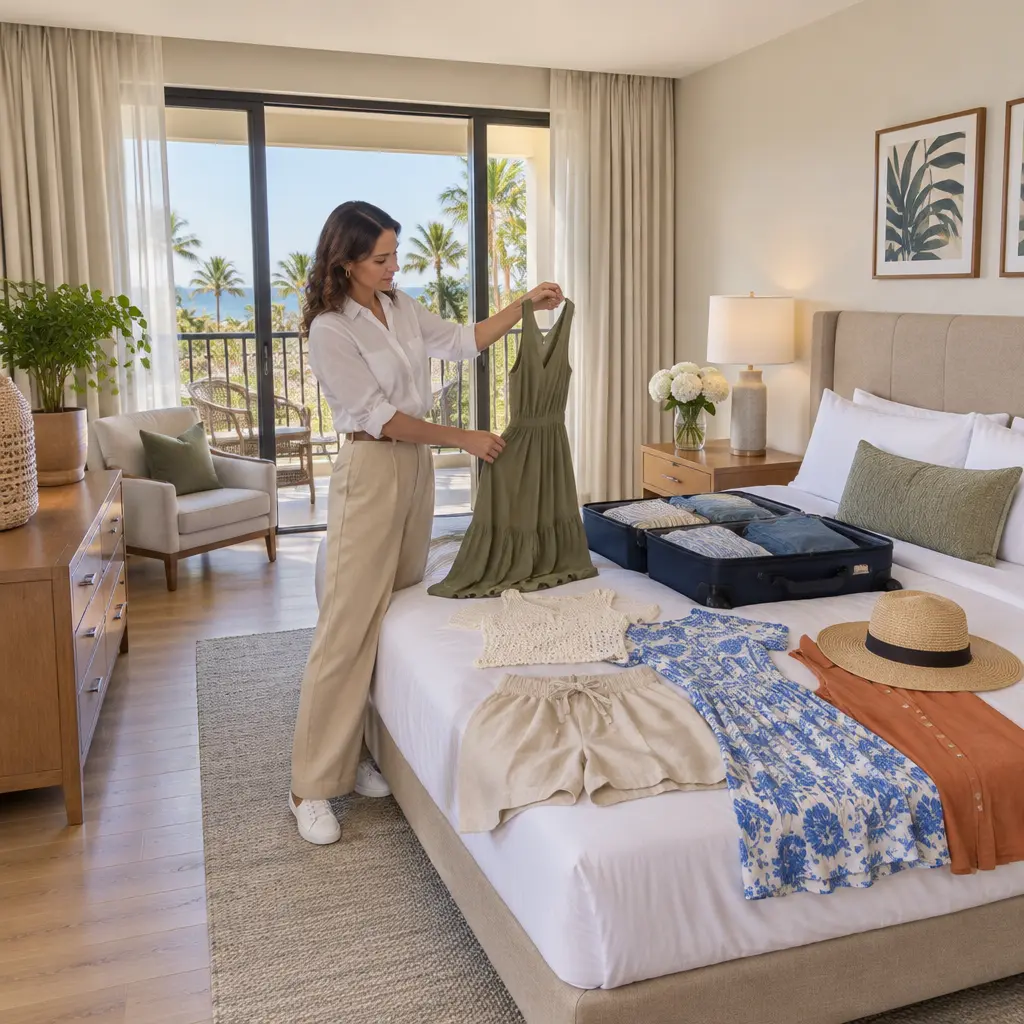
A luxury vacation wardrobe is a small, planned set of versatile clothing chosen for the trip’s activities, climate, dress codes, and laundry access. For most travelers, about 10–14 core outfits for a week—and roughly 14–20 for two weeks—are enough, provided pieces can be mixed and repeated. These are planning ranges, not a universal rule: the right count depends on whether the itinerary includes formal dinners, beach days, outdoor excursions, or frequent changes. The key is to pack complete looks rather than one outfit for every occasion, using a capsule wardrobe, a realistic laundry plan, and a few occasion-specific pieces to stay polished without overpacking.
Luxury vacation outfit planning starts with the itinerary
An outfit is a coordinated set of clothing and accessories worn for a particular occasion. For packing purposes, count complete looks—not individual garments—and remember that a single pair of trousers may work with several tops. The number you need is driven less by the destination’s luxury label than by the schedule: a resort stay with pool time and relaxed dinners calls for fewer distinct looks than a city itinerary with daytime sightseeing, evening events, and formal dress codes.
Travel research helps explain why a flexible plan matters. The U.S. Travel Association’s annual travel data tracks travel volume and spending, while the U.S. Bureau of Transportation Statistics documents how air travel involves baggage handling and operational constraints. Neither establishes a universal outfit quota, but both reinforce a practical point: travelers benefit from packing deliberately and checking their carrier’s current baggage allowance before departure. The outfit ranges below are planning estimates, not findings from a scientific study.
A practical outfit range by trip length
For a seven-night vacation, plan on approximately 10–14 distinct looks: seven daytime combinations, several evening looks, and one or two flexible options. For 10–14 nights, around 14–20 looks can work if you repeat separates and schedule laundry. These figures count combinations, not necessarily a fresh garment for every wear. A dress worn once is one look; the same trousers paired with three different tops can create three.
- Three to five nights: approximately 6–9 looks, including travel clothes and one dressier option.
- Seven nights: approximately 10–14 looks, with repeatable daytime separates.
- Ten to fourteen nights: approximately 14–20 looks, ideally supported by laundry or versatile pieces.
- Longer stays: pack for about one week of wear and plan to wash or refresh clothing rather than bringing a separate look for every day.
To make the estimate specific, divide the itinerary into daytime activities, evenings, and special occasions. Then account for the destination’s weather and dress expectations before selecting garments.
A luxury vacation wardrobe is a capsule of interchangeable pieces
A capsule wardrobe is a limited collection of compatible garments that can be combined into multiple outfits. The term is commonly used in fashion and wardrobe planning; there is no single official definition or required item count. Its useful principle is interchangeability: choose pieces that share a color palette, suit the same climate, and fit more than one setting.
For a luxury trip, capsule dressing can mean excellent fabric, fit, and finishing rather than a large quantity of clothing. A linen shirt might serve as a beach cover-up, a sightseeing layer, or part of a relaxed dinner look. A tailored trouser can work with a daytime knit and a more formal blouse. The more combinations each piece supports, the fewer garments are needed to create a complete-looking wardrobe.
Daytime outfits for sightseeing and resort activities
Daytime outfits should match the activity and conditions. City walking may call for breathable layers and comfortable shoes, while a resort day may need swimwear, a cover-up, and sandals. A useful starting point for a week is five to seven daytime combinations, built from repeatable tops, bottoms, dresses, or lightweight layers.
Check average temperatures, rain likelihood, and local customs for the actual dates of travel. The National Oceanic and Atmospheric Administration provides climate information that can help travelers distinguish a warm-looking forecast from a consistently hot or humid climate. For religious sites, historic buildings, or conservative settings, modest clothing may be required; the destination’s official visitor guidance is more reliable than assumptions based on resort attire.
Evening looks for restaurants and events
Evening outfits are looks planned for dinners, performances, or social events. A week-long trip might call for three or four evening combinations, but they do not all need to be formal. One versatile dress, a polished separate set, or a jacket that elevates daytime pieces may cover several dinners.
Luxury hotels and restaurants do not share one universal dress code. Before packing, check the specific property’s guidance and make reservations aware of any published requirements. If an itinerary includes a gala, private event, or fine-dining venue with a stated dress code, treat that as a distinct outfit need rather than assuming a general “smart casual” look will suffice.
Special-occasion and activity-specific outfits
Special-occasion outfits are garments reserved for a defined event or activity, such as a formal celebration, a hiking excursion, a spa visit, or a boat day. Add them only when the itinerary confirms they are needed. A pair of walking shoes, for instance, may be essential for an active excursion but unnecessary on a mostly poolside stay.
This is where a simple itinerary audit prevents both underpacking and excess. Mark each activity that requires different clothing, then ask whether an existing piece can cover it. If not, add the specific item—such as a swimsuit, rain layer, or formal shoe—instead of packing multiple speculative alternatives.
Laundry access and rewear determine how many outfits you need
Laundry access changes the number of garments required because clothes can be worn again after washing or airing. Hotel laundry, self-service facilities, and travel-friendly hand washing all reduce the need to pack for every day. The actual service, cost, and turnaround time vary by property, so confirm details before relying on laundry as part of the plan.
Rewearing does not mean repeating an identical look. Changing a top, shoes, belt, or outer layer can make the same base garment feel appropriate for a different occasion. At the same time, items worn in heat or during strenuous activities may need laundering after a single use. Plan repeats around fabric, weather, and comfort rather than a rigid rule.
A sample seven-night wardrobe
Consider a seven-night coastal stay with sightseeing, pool time, and several restaurant dinners. One practical plan might include five daytime looks built from three tops and two bottoms, two dresses or equivalent outfits, two swimsuits, one cover-up, three evening combinations, one light layer, and shoes suited to walking, the pool, and dinner. Some pieces overlap across categories, so this does not mean packing a separate garment for every listed look.
A simple text-based planning chart would show the schedule across seven days, with columns for daytime, evening, and activity-specific needs. The purpose is to identify repeatable pieces and gaps before packing—not to create seven entirely separate wardrobes.
When to pack more or less
Pack toward the lower end of the range when the trip is relaxed, laundry is available, and the same pieces suit multiple activities. Move toward the higher end when events require distinct dress, weather is unpredictable, or the itinerary involves several climates. Add a small contingency for spills or delays, but avoid multiplying full outfits for unlikely scenarios.
- Pack less: a stable climate, casual schedule, easy laundry, and coordinated separates.
- Pack more: formal events, outdoor activities, frequent outfit changes, or limited laundry access.
- Reassess: if an item serves only one hypothetical occasion, check whether it is worth its space and weight.
A packing method keeps a luxury wardrobe polished and manageable
A reliable packing method turns the outfit estimate into a practical list. Start with confirmed activities, check the forecast and dress codes, choose a coordinated palette, and assign garments to more than one look wherever possible. Then review footwear and accessories, which can take up substantial luggage space and strongly affect comfort.
- List each day’s planned activities and any stated dress requirements.
- Choose a small palette of colors so tops, bottoms, and layers coordinate.
- Build complete outfits, including shoes and any necessary underlayers.
- Mark which garments can be reworn and which need washing after use.
- Check the airline’s current baggage rules and the hotel’s laundry options.
- Remove pieces that do not complete a planned look or serve a clear contingency.
The International Air Transport Association notes that baggage allowances and policies are determined by individual airlines and fare conditions, so travelers should verify the rules with the operating carrier rather than rely on a general packing assumption. For a polished trip, the most useful metric is not the number of garments alone, but the number of complete, comfortable looks those garments can create.
Conclusion: plan outfits around experiences, not excess
A luxury vacation usually does not require a new outfit for every day. A week-long trip can often work with about 10–14 coordinated looks, while a longer stay may need roughly 14–20, adjusted for the itinerary, climate, dress codes, and laundry access. Capsule-wardrobe principles, purposeful evening and activity-specific pieces, and planned rewear help keep the suitcase useful rather than crowded.
Before packing, review your schedule, check destination conditions and venue expectations, and confirm baggage and laundry details. Build outfits from pieces that work together, then take only what supports a real activity or a sensible backup. The result is a wardrobe that feels considered and appropriate while leaving room to enjoy the vacation itself.
Sources: U.S. Travel Association, Travel Forecast and U.S. Travel Data, https://www.ustravel.org/research; U.S. Bureau of Transportation Statistics, Airline On-Time Statistics and Data, https://www.transtats.bts.gov/; National Oceanic and Atmospheric Administration, U.S. Climate Normals, https://www.ncei.noaa.gov/products/land-based-station/us-climate-normals; International Air Transport Association, Baggage, https://www.iata.org/en/youandiata/travelers/baggage/.