A vacation outfit plan is a coordinated set of clothing choices shaped by a trip’s activities, climate, dress expectations, and luggage limits. Thinking like a fashion stylist means planning outfits as a flexible wardrobe system rather than packing isolated looks: start with the itinerary, choose a cohesive palette, prioritize versatile pieces, and prepare for weather and practical needs. That approach matters when baggage space is limited and travel conditions change; the U.S. Department of Transportation notes that airline baggage policies vary, while the National Oceanic and Atmospheric Administration (NOAA) provides destination-specific climate information that can inform packing decisions. The sections below turn those principles into a practical method, from building a capsule wardrobe to styling for activities and checking the plan before departure.
How a Stylist Defines Vacation Outfit Planning
Vacation outfit planning is the process of matching garments and accessories to a trip’s schedule, setting, forecast, comfort requirements, and available luggage. A stylist’s key distinction is that each item should work as part of more than one outfit wherever possible. This is not a formal definition issued by a single professional association; it is a practical synthesis of wardrobe coordination and travel planning. The goal is not to minimize clothing at any cost, but to make each packing choice useful, comfortable, and appropriate.
The method has several connected parts: itinerary analysis, palette and silhouette planning, outfit versatility, and contingency preparation. Together, they help travelers avoid packing for an imagined trip instead of the one they have booked. For example, a city break with museum visits, restaurant reservations, and transit calls for different footwear and layers than a beach holiday with mostly outdoor activities.
Itinerary-led outfit planning
Itinerary-led planning means assigning clothing needs to actual activities before selecting garments. List each day’s main settings—such as walking tours, swimming, meetings, dinners, or outdoor excursions—and note any dress code, movement, or weather demands. This simple audit prevents overpacking formalwear for a casual trip or forgetting practical layers for a long day outside.
Start with the least flexible activities. A hike may require specific shoes and sun protection; a religious or cultural site may require more coverage; a special event may call for one distinctive outfit. Build everyday looks around those fixed requirements. NOAA’s climate resources can help travelers review historical and current conditions, while a short-range forecast closer to departure is better for last-minute adjustments. Climate averages are useful context, not a guarantee of the weather on a particular day.
Versatility and outfit yield
Outfit yield is the number of distinct, suitable looks a group of garments can create. It is a useful planning measure, though it is not a standardized industry statistic. A neutral trouser, for instance, might pair with a daytime shirt, a lightweight knit, and a dinner top. A garment that works for several settings can be more valuable than a single-use item, provided it is comfortable and appropriate for the trip.
A practical test is to lay out each planned outfit and identify whether one item can substitute across multiple days. Avoid counting combinations that depend on uncomfortable shoes, unsuitable weather, or an item that needs cleaning before it can be worn again. The U.S. Department of Transportation advises passengers to check their airline’s specific baggage rules, since allowances and fees differ; a versatile plan can help make limited carry-on space go further, but it does not replace checking the applicable policy.
How a Stylist Builds a Vacation Capsule Wardrobe
A vacation capsule wardrobe is a compact collection of garments selected to coordinate across several outfits and trip activities. It is a type of travel wardrobe planning, not a fixed number of pieces. Capsule size should reflect trip length, laundry access, climate, and the traveler’s comfort and style. The most useful capsule combines compatible colors, practical layers, and a few activity-specific items.
To build one, choose a small color story, then select pieces that share at least one color or styling feature. Add a limited number of accents for variety. This creates visual cohesion without requiring every item to be identical, and it makes it easier to dress when plans shift.
Choose a cohesive color palette
A color palette is a planned group of shades that work together. For travel, a useful approach is to choose two or three base colors, one or two accent colors, and a small number of prints that include those shades. Base colors make repeat wear and mixing easier; accents add personality and help outfits feel distinct in photographs.
For example, navy, cream, and denim can form a base, with coral or green as an accent. The palette should suit the traveler’s preferences and destination rather than follow a universal rule. Before packing, check that tops and bottoms can be paired in more than one way and that accessories complement several looks.
Plan layers for changing conditions
Layering is the practice of combining garments so warmth and coverage can be adjusted throughout the day. A light base layer, a mid-layer such as a cardigan or shirt, and an outer layer suited to wind or rain can be more adaptable than one bulky item. The exact combination depends on the destination and planned activities.
Check the forecast shortly before departure and consider indoor conditions too: air-conditioned transport, museums, and restaurants may feel cooler than outdoor settings. A compact rain shell, sun-protective layer, or warm scarf may earn its space if it addresses a likely condition. NOAA climate normals describe long-term averages, so use them to understand typical seasonal patterns rather than to predict a specific day.
Balance statement pieces with dependable basics
A statement piece is an item that draws attention through its color, cut, texture, or pattern. Dependable basics are easy-to-coordinate garments that support repeated outfits. A stylistic balance between the two helps a compact wardrobe feel expressive without making every look difficult to assemble.
Choose statement pieces with a clear role, such as a patterned shirt for a dinner or a distinctive accessory that refreshes a familiar outfit. Keep the rest of the look comfortable and compatible with the capsule. Before packing a special item, consider whether it suits the expected setting and whether it can be worn more than once in a different combination.
How a Stylist Matches Vacation Outfits to Activities
Activity-based styling matches an outfit’s function and formality to what the traveler will actually do. It connects wardrobe planning with footwear, fabric, coverage, and local expectations. A useful plan includes distinct outfit categories—such as travel-day, walking, swimming, evening, or outdoor looks—while allowing pieces to overlap where practical.
This is where a capsule becomes a working travel wardrobe rather than a color exercise. A breathable shirt may serve for sightseeing and dinner; comfortable trousers may work for a transit day and a casual meal. The aim is to avoid both extremes: packing only attractive outfits that are impractical, or packing only functional items that do not feel like the traveler’s own style.
Comfortable outfits for transit and walking
Transit and walking outfits prioritize movement, temperature changes, and footwear that can handle the planned distance. Choose shoes that have been worn comfortably before the trip, and account for the full day rather than only the time spent in transit. A layer that is easy to remove and a bag-friendly outfit can make airport, train, and road journeys more manageable.
For a walking-heavy itinerary, test the complete outfit at home: shoes, socks, bag, and outer layer. This can reveal rubbing, restrictive seams, or an inconvenient bag before departure. The U.S. Centers for Disease Control and Prevention’s travel guidance emphasizes preparing for destination-specific health needs; travelers should also consider sun protection, hydration, and appropriate clothing for outdoor exposure.
Outfits for cultural sites and local dress expectations
Culturally attentive dressing means checking the expectations of places a traveler plans to visit and choosing clothing that supports respectful participation. Requirements vary by country, venue, and circumstance, so do not assume one rule applies everywhere. Research official visitor guidance for religious sites, historic locations, and events, and pack a versatile layer if additional coverage may be needed.
A light scarf, overshirt, or longer bottom can sometimes make an outfit more adaptable, but it should not be treated as a universal solution. Local guidance and the specific site’s rules take priority. Planning this in advance reduces the chance of being turned away or needing an uncomfortable last-minute purchase.
Evening looks and special occasions
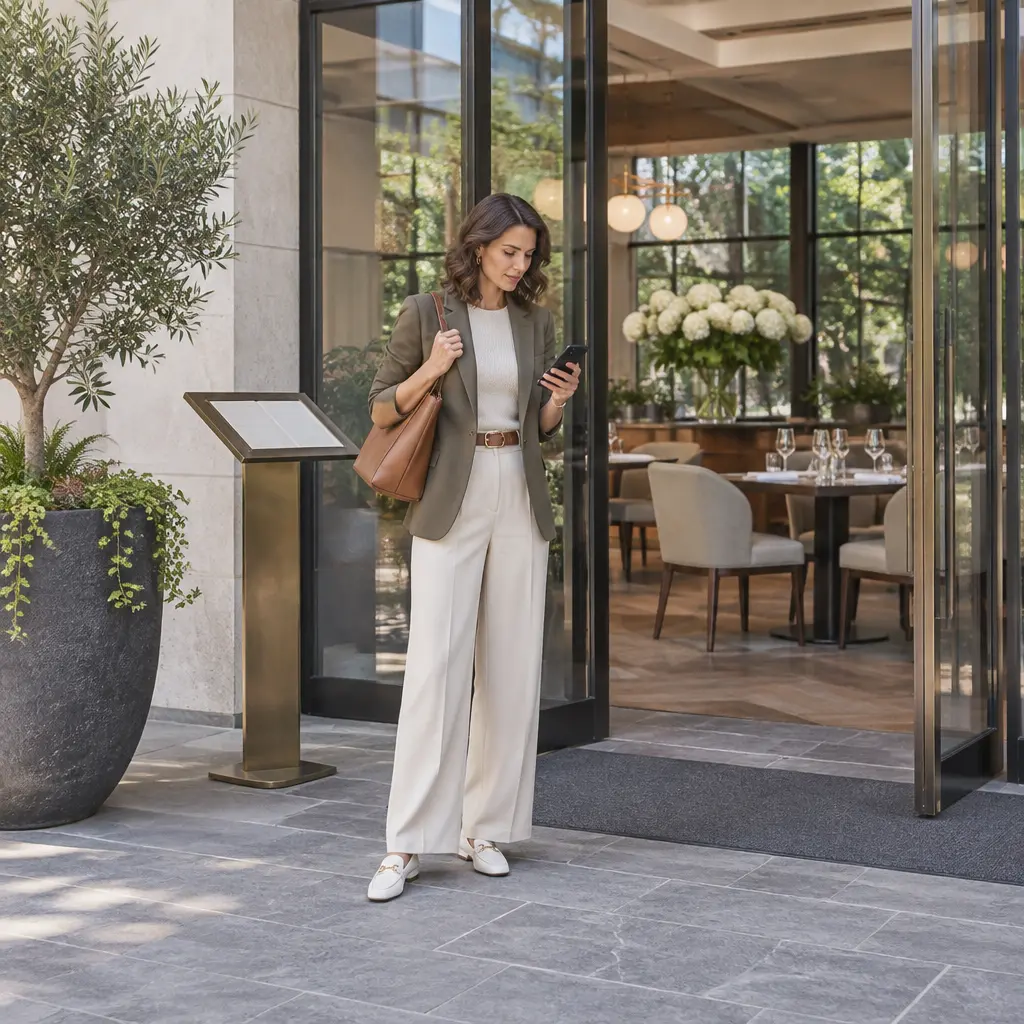
Evening styling accounts for venue formality, the journey to and from the venue, and the possibility of changing weather. One well-chosen outfit can often serve several occasions through changes in shoes, jewelry, a jacket, or another accessory. Confirm reservation details and dress guidance where available instead of packing multiple formal options “just in case.”
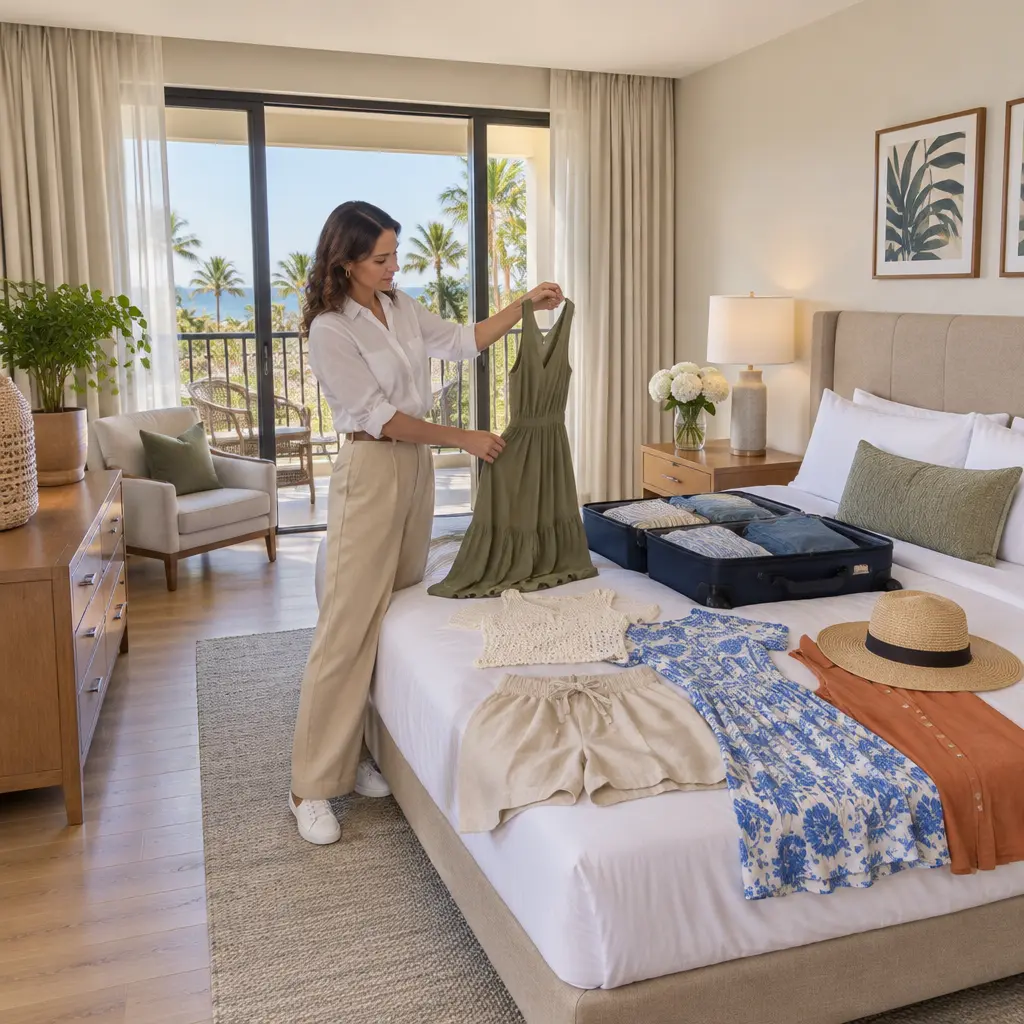
For a real-world example, imagine a four-day coastal city trip with a walking tour, a beach afternoon, a museum visit, and one restaurant reservation. A coordinated shirt and trouser can cover the tour and museum; swimwear and a quick-drying cover-up serve the beach; a light jacket and a change of accessories can make the same base pieces suitable for dinner. This example illustrates the planning method, not a prescribed packing list.
How a Stylist Checks a Vacation Outfit Plan
A final outfit audit checks whether the plan is complete, comfortable, and realistic to pack. It links the wardrobe to luggage constraints and identifies gaps before they become travel problems. Review outfits as complete combinations, including undergarments, shoes, bags, and weather layers, rather than counting garments alone.
Use a packing checklist and outfit grid
An outfit grid maps each day or activity to a planned look. It can be a paper list or a simple digital note with columns for activity, outfit, footwear, outer layer, and any special item. The grid makes repetition visible and helps distinguish deliberate rewearing from accidental duplication.
- Write down the trip’s activities and any dress requirements.
- Assign a complete outfit to each fixed event or high-demand activity.
- Check that everyday garments combine across the selected palette.
- Identify laundry opportunities and plan rewearing accordingly.
- Confirm airline baggage limits and leave room for essentials or purchases.
Test fit, fabric, and care needs
A wear test checks how an outfit feels during ordinary movement and whether its fabric suits the trip. Sit, walk, reach, and try the shoes with the planned socks. Review care labels, drying time, wrinkle behavior, and whether an item can be cleaned easily while traveling. A garment that requires special care may be a poor fit for a trip without laundry or pressing access.
Fabric performance depends on construction and conditions, not just fiber names. A breathable garment may be useful in warm weather, while a quick-drying piece can help around water or during repeated wear. Avoid assuming one fabric is best for every climate; match the material to the activity, forecast, and personal comfort.
Pack for contingencies without overpacking
Contingency packing means carrying a small number of items for plausible disruptions, such as rain, a temperature drop, or a delayed return. It differs from packing for every imaginable scenario. Choose backup pieces that serve more than one purpose—for example, a layer that works in transit and outdoors—and use the destination forecast and itinerary to decide what is justified.
For travelers who want to reduce environmental impact, the United Nations Environment Programme identifies textiles as a significant part of global environmental pressures, including resource use and waste. Rewearing, repairing, and choosing garments that will be used beyond one trip are practical ways to avoid treating vacation clothing as disposable. The most sustainable packing decision is generally one that makes useful wear of clothes already owned.
Conclusion: Think in Outfits, Not Isolated Pieces
Stylist-led vacation outfit planning begins with the itinerary, uses a cohesive capsule wardrobe, matches clothing to activities and local expectations, and ends with a practical fit, care, weather, and baggage check. The central idea is to choose garments that work together and suit the trip—not to follow a rigid item count or trend. Before packing, make a simple outfit grid, check current destination conditions and airline baggage rules, and try on the looks you plan to wear. A little preparation can make travel dressing more comfortable, adaptable, and intentional.
Sources: U.S. Department of Transportation, Airline Baggage Fees, https://www.transportation.gov/policy/aviation-policy/airline-baggage-fees; National Oceanic and Atmospheric Administration, U.S. Climate Normals, https://www.ncei.noaa.gov/products/land-based-station/us-climate-normals; U.S. Centers for Disease Control and Prevention, Travelers’ Health, https://wwwnc.cdc.gov/travel; United Nations Environment Programme, Sustainability and Circularity in the Textile Value Chain: A Global Roadmap, https://www.unep.org/resources/publication/sustainability-and-circularity-textile-value-chain-global-roadmap.