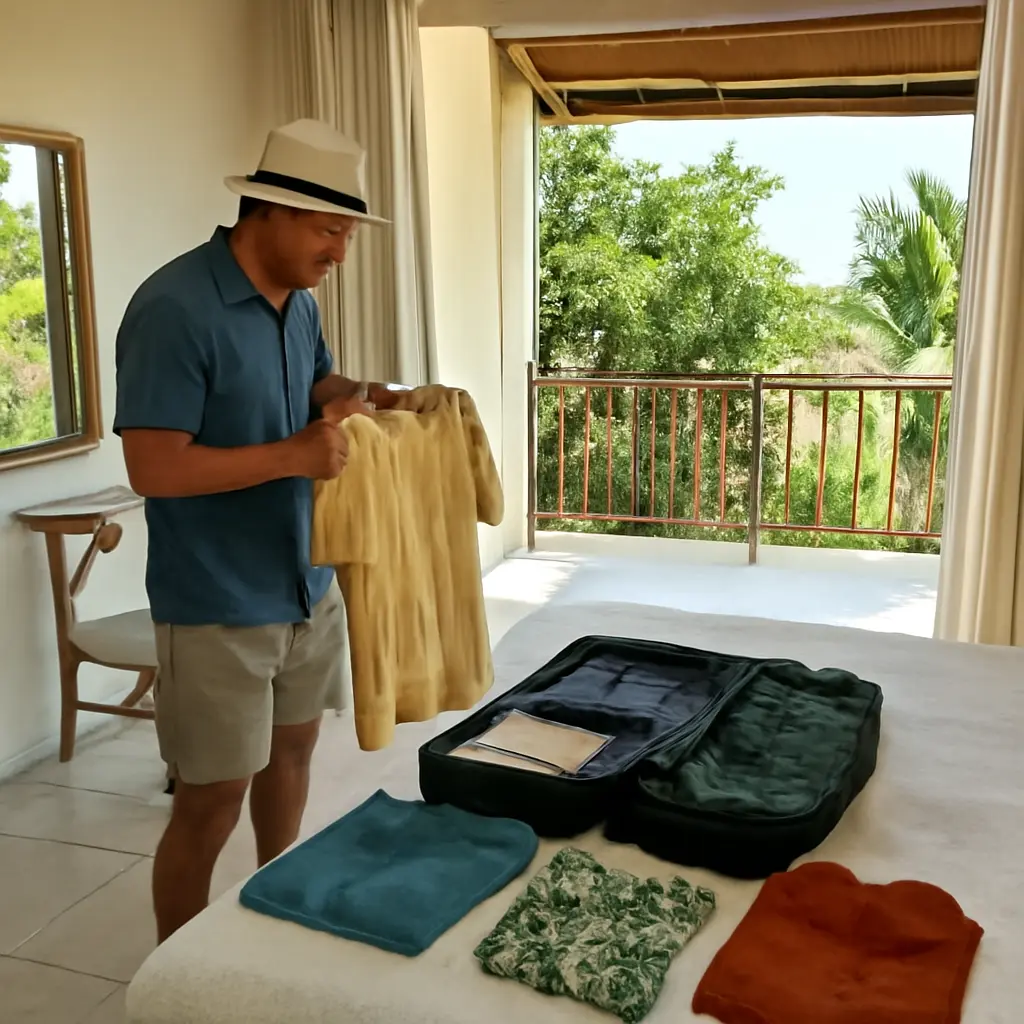
Island getaway outfit packing errors happen when travelers choose clothing without accounting for local weather, activities, transportation, and practical needs. The most common mistakes are overpacking, bringing unsuitable shoes or fabrics, overlooking sun and rain protection, and failing to plan outfits that work across changing conditions. These errors matter: the National Oceanic and Atmospheric Administration describes tropical cyclones as hazards that can bring heavy rain, strong winds, and flooding, while the U.S. Centers for Disease Control and Prevention advises travelers to protect themselves from sun exposure. A better packing plan pairs versatile clothing with activity-specific essentials and checks the destination forecast before departure.
How Packing Errors Shape Island Getaway Outfits
A packing error is a preventable mismatch between what a traveler brings and what a trip actually requires. For island outfits, that mismatch can involve climate, terrain, dress expectations, luggage limits, or the difference between beach time and excursions. There is no single authoritative statistic for how often travelers make clothing-packing mistakes, so the practical evidence comes from travel guidance on weather, health, and baggage restrictions rather than an unsupported universal error rate.
The main categories are climate errors, footwear errors, activity-planning errors, outfit-volume errors, and missing-protection errors. They overlap: packing only light cotton clothes, for example, may leave someone uncomfortable during a rainy boat trip, while bringing several formal outfits can consume space better used for a light layer or walking shoes. A destination-specific checklist helps identify these risks before they become inconvenient or costly.
Climate and Weather Mismatches
A climate mismatch occurs when clothing is selected for an imagined “always sunny” island rather than the destination’s actual conditions. Islands can be humid, windy, rainy, or cool after sunset, and weather can shift during a single trip. NOAA’s National Hurricane Center notes that tropical cyclones can bring hazards including heavy rainfall, storm surge, and damaging winds; travelers should therefore check seasonal advisories and current forecasts, not rely on postcard imagery.
Pack a lightweight rain shell or compact umbrella when forecasts and local conditions warrant it, along with a breathable layer for air-conditioned transport or breezy evenings. The NOAA Climate Prediction Center’s seasonal outlooks can provide broader context, but a short-range forecast closer to departure is more useful for choosing specific garments.
Overpacking and Single-Use Outfits
Overpacking means bringing more clothing than the itinerary requires, often because each activity is assigned a separate outfit. The result is a heavier bag and fewer options when plans change. The U.S. Department of Transportation explains that airline baggage rules and fees vary by carrier, so travelers should verify their own airline’s size, weight, and fee requirements rather than assume that one allowance applies everywhere.
A capsule approach reduces this risk: choose a small palette of coordinating tops and bottoms, then repeat pieces in different combinations. For instance, a breathable shirt can work for a daytime market, a casual lunch, and a layered evening look. This is especially useful when laundry is available or the trip is short.
How Outfit Choices Affect Island Activities
Once weather and luggage volume are considered, the next packing errors involve matching outfits to how travelers will move through the destination. A beach holiday may include rocky shorelines, boat transfers, hikes, cultural sites, and restaurants—not just time beside a pool. The right outfit is therefore one that suits the activity while remaining comfortable and respectful of local expectations.
Choosing the Wrong Shoes
Footwear errors occur when travelers pack only flip-flops or fashionable shoes despite plans that require walking, uneven terrain, or secure footing. Sandals may be convenient on sand but can be unsuitable for rocky paths or longer hikes. The U.S. National Park Service routinely advises visitors to select footwear appropriate to trail conditions; the same principle applies to island excursions, where heat, wet surfaces, and rough ground can change what is safe and comfortable.
Match shoes to the itinerary: bring comfortable walking shoes for town or trails, water-friendly footwear if the activity or local guidance calls for it, and simple sandals for casual use. Avoid wearing brand-new shoes for a long excursion, since friction and blisters can undermine the day.
Packing for the Beach but Not the Excursion
An activity-planning error is packing outfits for the most visible part of the trip while forgetting practical needs for the rest. A swimsuit does not replace quick-drying clothing, a cover-up, or a change of clothes after swimming. Travelers taking boats or snorkel trips should check operator instructions in advance; some excursions require secure footwear or recommend clothing that protects skin from sun and spray.
Build outfits around the itinerary rather than assumptions: note the number of beach days, walking tours, water activities, and dinners, then select garments that can serve more than one purpose. A lightweight cover-up, for example, can provide modest coverage between beach and café, subject to the venue’s rules.
Ignoring Local Dress Expectations
A dress-code mistake happens when beachwear is worn in settings where more coverage is expected. Customs differ among islands and communities, and places of worship or formal venues may require shoulders or knees to be covered. The U.S. Department of State’s country information pages provide destination-specific cultural and travel context; visitors should also follow posted instructions and local guidance.
Pack a versatile light shirt, wrap, or longer skirt or trousers that can be added when entering a village, religious site, or more formal establishment. This small adjustment helps travelers move comfortably between beach settings and community spaces without treating local norms as an afterthought.
How Sun, Rain, and Fabric Choices Affect Comfort
Even a well-planned outfit can fail if it provides inadequate protection or becomes uncomfortable in heat and humidity. Fabric selection, sun protection, and spare clothing are closely related: they determine whether travelers can stay comfortable when the weather or activity changes.
Forgetting Sun-Protective Clothing
A sun-protection error is relying on a swimsuit or thin clothing alone during prolonged outdoor exposure. The CDC recommends seeking shade, wearing protective clothing, and using broad-spectrum sunscreen with SPF 15 or higher as part of sun-safety practices. Clothing that covers more skin, plus a brimmed hat and sunglasses, can complement sunscreen; no single garment eliminates all risk.
Include a breathable long-sleeved shirt or rash guard for extended time on the water or in direct sun. For travelers with specific medical concerns or high sensitivity to sunlight, seek individualized advice from a healthcare professional before travel.
Packing Fabrics That Stay Damp or Feel Too Hot
A fabric mismatch occurs when clothing is selected for appearance alone and performs poorly in humidity, rain, or repeated swimming. Heavy garments may take longer to dry, while tight or non-breathable fabrics can feel uncomfortable in hot conditions. Quick-drying materials can be useful for travel days and water activities, but travelers should also consider comfort, durability, and care instructions.
Choose breathable everyday pieces and reserve swimwear for swimming rather than assuming it will serve as a complete outfit. A dry change of clothes in a day bag can be useful after a boat trip or sudden shower. Avoid packing more delicate pieces than can be handled by the available laundry arrangements.
Leaving Out a Light Layer and Rain Option
A layering error is assuming that warm daytime temperatures mean no extra clothing is needed. Air-conditioned rooms, ferry decks, evening breezes, and rain can make a thin layer practical. The World Meteorological Organization emphasizes that weather conditions and forecasts are location- and time-specific, so travelers should check current information for the island and travel dates.
A compact layer and a packable rain option often take less space than multiple backup outfits. They are especially useful when the itinerary includes open-air transport, high ground, or days during a wetter season.
A Practical Checklist to Prevent Packing Errors
A reliable packing plan starts with evidence about the trip: forecast, activities, airline rules, and local expectations. Travelers can use the following sequence to turn those details into a small, adaptable outfit plan.
- Check the destination forecast and seasonal weather information shortly before departure.
- List planned activities and identify any special clothing or footwear requirements.
- Confirm airline baggage dimensions, weight limits, and fees directly with the carrier.
- Select coordinating pieces that can be worn in multiple combinations.
- Add sun protection, a light layer, and rain protection where the itinerary or forecast calls for them.
- Set aside appropriate coverage for cultural sites, restaurants, or other venues with dress expectations.
- Wear or pack shoes that suit the most demanding walking activity, not just the beach.
A useful visual aid is a simple outfit matrix with trip days across the top and activities down the side. Mark each clothing item against the activities it serves; items used once may be candidates to leave behind, while gaps reveal missing essentials. This is a planning tool rather than a scientific measure, but it makes duplication and omissions easier to spot.
Conclusion: Pack Island Getaway Outfits for the Real Itinerary
The most avoidable island getaway outfit mistakes are packing for an idealized forecast, bringing too many single-use looks, choosing unsuitable shoes or fabrics, and overlooking sun protection, rain, or local dress expectations. A climate-aware, activity-based capsule wardrobe addresses these risks while keeping luggage manageable. Before leaving, check the forecast, review airline rules, and confirm any activity or venue requirements; then pack outfits that can adapt to more than one part of the trip.
Sources: National Oceanic and Atmospheric Administration, National Hurricane Center, Tropical Cyclone Hazards, https://www.nhc.noaa.gov/prepare/hazards.php; National Oceanic and Atmospheric Administration, Climate Prediction Center, https://www.cpc.ncep.noaa.gov/; U.S. Department of Transportation, Airline Baggage Fees, https://www.transportation.gov/personal/aviation-consumer-protection/baggage-fees; U.S. Centers for Disease Control and Prevention, Sun Exposure, https://www.cdc.gov/skin-cancer/sun-safety/index.html; U.S. National Park Service, Hiking Safety, https://www.nps.gov/articles/hiking-safety.htm; U.S. Department of State, Learn About Your Destination, https://travel.state.gov/content/travel/en/international-travel/International-Travel-Country-Information-Pages.html; World Meteorological Organization, Weather and Climate, https://wmo.int/