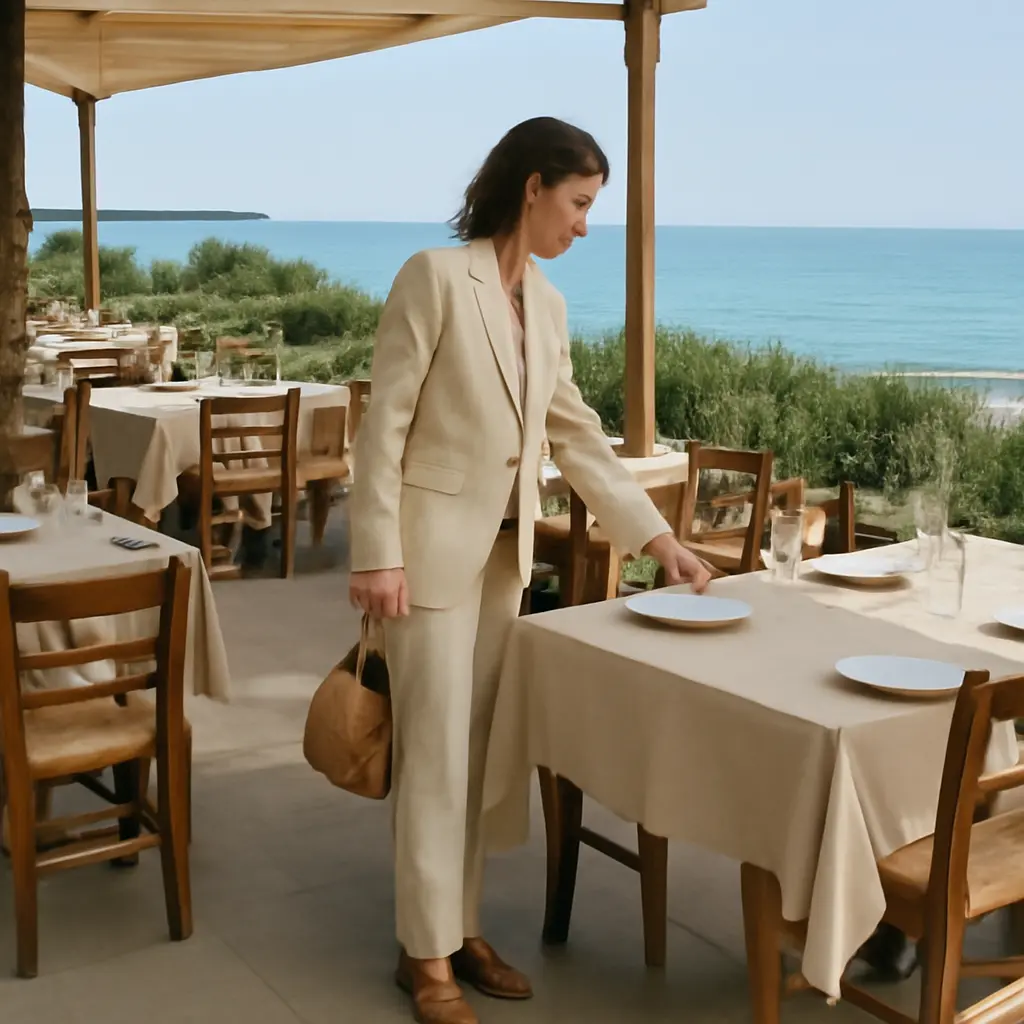
Beachy dinner style is the art of bringing coastal ease to an evening outfit without looking underdressed or as if you have come straight from the sand. The key is deliberate contrast: relaxed textures such as linen, raffia, and cotton paired with polished shapes, considered accessories, and shoes suited to the venue. That approach makes beach-inspired dressing practical, too: linen’s airy weave can feel comfortable in warm weather, while a structured silhouette and a defined accessory palette signal that the look is meant for dinner. Below, learn how to choose fabrics and shapes, build outfits for different settings, and finish them with details that look intentional.
Beachy dinner style: the defining attributes
Beachy dinner style is a warm-weather approach to dressing that combines coastal materials and relaxed proportions with the finish expected for an evening out. It is not a formal dress code with one official definition; rather, it is a styling formula. The Metropolitan Museum of Art’s Costume Institute describes linen as a textile made from flax fibers, a material valued historically for its lightness and absorbency. Those qualities help explain its place in warm-weather wardrobes, but fabric alone does not make an outfit dinner-ready: fit, finish, and context matter.
Think of the look as a spectrum. A breezy daytime dress can become an evening outfit with a sharper shoe and sculptural jewelry; a tailored linen set can feel coastal with woven accessories. The most reliable attributes are a coherent color palette, one or two natural textures, clean lines, and at least one polished element. The World Meteorological Organization has reported that 2023 was the warmest year in its observational record at the time of publication, offering broader context for the continuing appeal of breathable warm-weather clothing. That climate statistic is not a measure of fashion preferences, but it underscores why comfort and heat-conscious fabric choices are relevant.
The polished coastal silhouette
A polished coastal silhouette balances ease with shape. Choose one relaxed element—a flowing skirt, wide-leg trouser, or loose shirt—and offset it with structure, such as a defined waist, a crisp collar, or a clean shoulder line. For example, a linen shirt tucked into a bias-cut skirt looks more composed than the same shirt worn untucked over beach shorts. This balance is useful because it preserves movement and airflow while making the outfit read as intentional rather than improvised.
A restrained palette and texture mix
A coastal palette often draws on ivory, sand, navy, sea-glass green, terracotta, and sun-washed blue. Choose two or three colors, then add texture through linen, cotton, raffia, leather, or subtle shell details. The U.S. Federal Trade Commission’s clothing-labeling guidance explains that fiber content must be disclosed on most textile products, which makes garment labels a practical way to check what a piece is actually made of rather than relying on names such as “linen feel.” A small amount of texture usually looks more refined than combining several visibly rustic accessories at once.
Choose beachy dinner outfits by occasion
Once the defining attributes are clear, the next step is matching them to the setting. A casual seafood restaurant, a resort terrace, and an upscale dining room may all invite coastal styling, but they do not call for the same degree of polish. Treat the venue’s posted dress guidance as the most useful standard, then adjust fabric, coverage, and footwear accordingly.
Casual seaside restaurant
For a casual dinner near the water, try a midi dress with flat leather sandals, or tailored shorts with a button-front shirt and a woven belt. Keep beachwear details to one focal point, such as a raffia bag or shell pendant. Avoid swim cover-ups, damp fabrics, and flip-flops if the restaurant setting suggests a more finished look. A lightweight layer is useful when the sea breeze picks up after sunset.
Resort terrace or sunset dinner
A resort terrace supports more expressive styling: a coordinated linen set, a printed wrap dress, or a flowing skirt with a fitted top. Elevate the outfit with a low block heel, sleek flat, or refined sandal, plus earrings that echo one color in the print. If the setting includes outdoor dining, consider how the garment moves in wind and whether its length works with the chair and table. A lightweight jacket, shawl, or overshirt adds both warmth and visual finish.
Upscale dining room
For a more formal restaurant, keep the coastal reference subtle. A tailored jumpsuit, a structured midi dress, or pressed trousers with a sleeveless blouse can retain a relaxed feel through color and fabric while meeting a more elevated standard. Choose refined leather footwear and a compact bag; reserve beach-specific accessories for one understated accent. When a venue publishes a dress code, follow it rather than assuming that a seaside location means casual attire.
Finish the outfit with fabric, fit, and practical details
An outfit’s final impression depends on how it wears as well as how it looks. Natural, breathable fibers can be comfortable in heat, but they may wrinkle; slippery fabrics can move beautifully but may need careful undergarments or a lining. A useful final check is to sit, walk, and raise your arms in the outfit before leaving. That simple test catches hems that drag, waistbands that shift, and necklines that need constant adjustment.
Linen, cotton, and other warm-weather fabrics
Linen and lightweight cotton are classic choices for warm evenings because they feel airy and are available in both relaxed and tailored forms. Their casual character can be balanced with a clean cut, a neat tuck, or pressed details. For lower-maintenance alternatives, consider cotton blends or other lightweight fabrics whose care instructions suit the occasion. Read the garment label, and avoid claiming that a fabric is “cooling” or “UV-protective” unless the maker provides reliable product information.
Shoes and accessories that look deliberate
Shoes often determine whether a coastal outfit reads as daytime or dinner-ready. Leather sandals, refined flats, espadrilles, and low block heels can all work, depending on the venue and walking surface. Pair a woven bag with simple jewelry, or choose statement earrings with a minimal bag; avoid making every accessory compete for attention. For outdoor tables, a stable heel and a layer that can be folded over a chair are practical as well as stylish.
A quick, real-world outfit formula
For a sunset dinner, start with a navy linen-blend trouser and an ivory sleeveless top, add a tan leather sandal, then carry a small woven clutch. The darker trouser gives the outfit evening definition, while the light top and woven accessory keep the coastal mood. If the restaurant is more formal, swap the clutch for a structured leather bag and the sandal for a polished flat. This example shows how a few controlled changes can shift one outfit across different levels of formality.
Conclusion: make coastal ease feel intentional
Beachy dinner style works when relaxed fabrics and coastal details are balanced with a defined silhouette, a controlled palette, and venue-appropriate finishing touches. Choose breathable materials with care, match the level of polish to the restaurant, and test the outfit for comfort before you go. Start with one piece you already own—perhaps a linen shirt or a flowing skirt—and build around it with considered shoes and a single texture-rich accessory. The result can feel effortless without looking accidental.
Sources: The Metropolitan Museum of Art, “Linen,” https://www.metmuseum.org/learn/educators/curriculum-resources/art-of-the-islamic-world/unit-one/linen; World Meteorological Organization, “WMO confirms that 2023 smashes global temperature record,” https://wmo.int/news/media-centre/wmo-confirms-2023-smashes-global-temperature-record; U.S. Federal Trade Commission, “Clothing and Textiles: The Textile and Wool Acts,” https://www.ftc.gov/business-guidance/resources/threading-your-way-through-labeling-requirements-under-textile-wool-acts