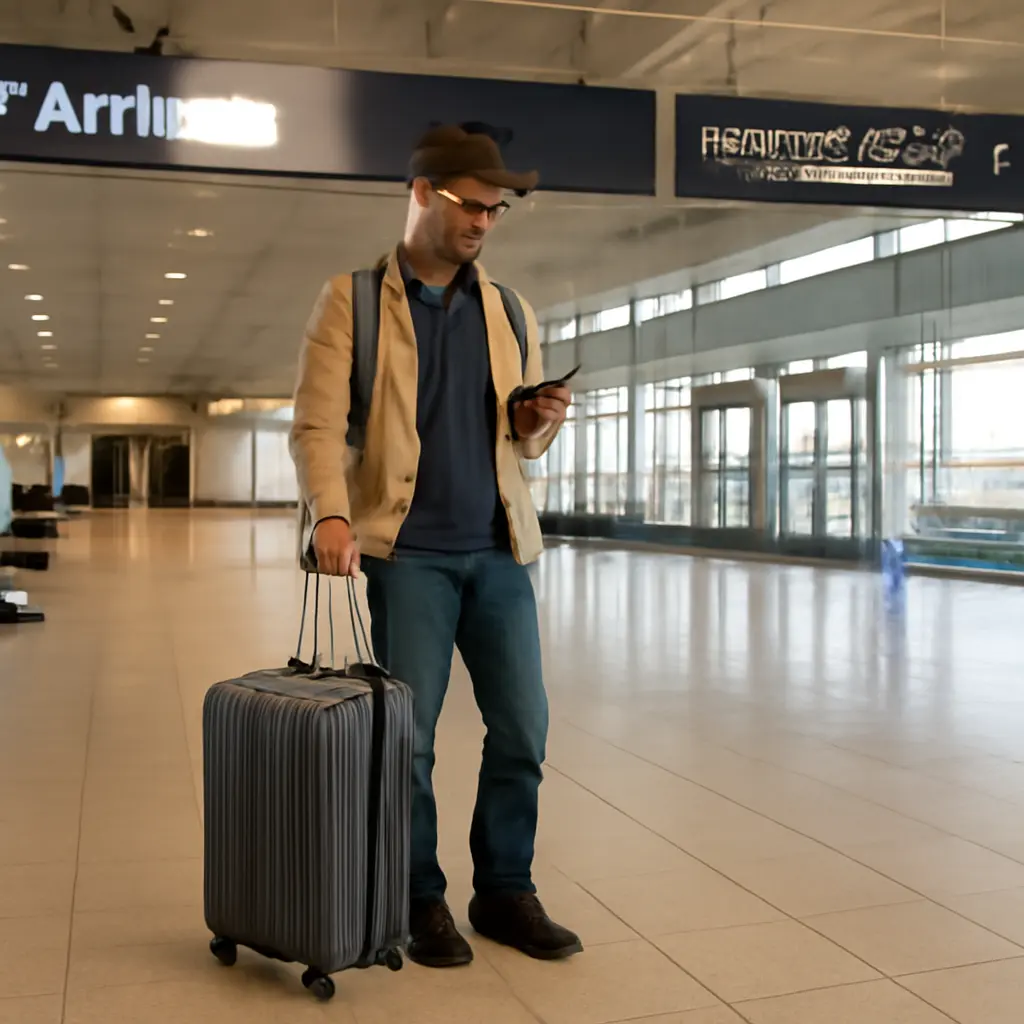
Tourists are visitors traveling outside their usual environment, and locals often recognize them not by one unmistakable feature but by a cluster of behaviors: checking directions, pausing to orient themselves, carrying travel gear, and navigating unfamiliar customs. Airports make these clues especially visible, but they are imperfect signals—not proof of someone’s nationality, experience, or intentions. Research on tourist behavior and travel statistics help explain why visitors stand out, while also showing why stereotypes about clothing or appearance are unreliable.
Travel behavior reveals tourist status more reliably than appearance
Tourist recognition is an informal judgment based on observable cues. There is no authoritative checklist that locals use, and no single cue establishes that a person is a visitor. Tourism researchers instead describe travel through characteristics such as movement beyond a person’s usual environment, temporary stays, and activities undertaken at a destination. The United Nations’ International Recommendations for Tourism Statistics treats visitors as travelers whose trips are outside their usual environment and generally last less than a year, subject to specific statistical definitions.
At an airport, the most telling clues tend to be practical and situational: someone may stop to read signs, consult a map, compare transit options, or ask how to reach a hotel. These actions are common among visitors, but they also describe residents arriving in an unfamiliar terminal or returning after a long absence. The distinction matters: noticing unfamiliarity can be useful for offering help, while treating it as a reliable identity test can reinforce mistaken assumptions.
Wayfinding pauses and repeated sign-checking
Wayfinding is the process of determining where to go and selecting a route. A newly arrived visitor may scan overhead signs, stop at a terminal map, or look repeatedly between a phone and the surroundings. Airports concentrate these behaviors because passengers must connect baggage claim, immigration, ground transport, and onward travel. A pause can indicate unfamiliarity with the building, however—not necessarily tourism. Airport design research has long treated clear signs and maps as important aids for people navigating complex public spaces.
Luggage, travel documents, and arrival routines
Suitcases, backpacks, boarding passes, and baggage-claim checks are visible travel-related objects. Their presence may suggest that someone is arriving from elsewhere, but luggage cannot reveal whether that person is a tourist, a local coming home, a business traveler, or someone relocating. The U.S. National Travel and Tourism Office tracks international visitor travel through surveys and administrative data rather than appearance, reflecting the limits of judging travel status from a glance.
Digital habits and transit choices offer additional clues
Once travelers leave the arrivals area, their choices can provide more context than their clothes. Visitors may need to identify a local transit card, decide between a taxi and train, or check whether a ride-hailing pickup point is in a separate zone. These are examples of travel-related tasks, not definitive signs of being a tourist; residents also use navigation apps and may be unfamiliar with a particular route.
Phone use, maps, and translation
Frequent map checks, searching for a hotel address, or using translation tools can indicate that a traveler is orienting themselves. The International Telecommunication Union reported that 5.5 billion people—about 68% of the global population—used the internet in 2024, illustrating how widely digital tools are available, though access and usage vary substantially. A phone screen itself says little: locals also rely on maps, messaging, and translation, and travelers may keep their devices tucked away.
Unfamiliarity with local transport and payment systems
A visitor may hesitate at ticket machines, ask which platform serves the city center, or need time to understand contactless payment rules. Each destination has its own fare zones, transit vocabulary, and airport connections, so even experienced travelers can be newcomers to a particular system. These moments are often opportunities for practical assistance: a clear direction or explanation can be more useful than guessing where someone is from.
Clothing and social habits are weak indicators of tourist status
Appearance-based judgments are less dependable than context and behavior. Comfortable shoes, a camera, a sun hat, or a daypack may be associated with sightseeing, but locals use the same items, and many visitors dress much like residents. Likewise, accent, skin color, or clothing should not be treated as proof that someone is foreign or unfamiliar with a place. Such assumptions can become discriminatory when they are used to decide who belongs or who deserves help.
Comfortable clothes and visible travel gear
Travel clothes are chosen for comfort, weather, and luggage constraints. A person wearing practical shoes and carrying a backpack may be heading to work, visiting family, or exploring the city. The U.S. Travel Association’s national travel reporting distinguishes trips by purpose and other survey measures, not by dress, underscoring that travel categories are established through evidence about a trip rather than visual stereotypes.
Photography, sightseeing, and attention to surroundings
Taking photos of a landmark, reading a plaque, or looking upward at distinctive architecture can suggest sightseeing. Yet photography is routine for residents too, and visitors do not necessarily behave like sightseers. The World Tourism Organization’s tourism statistics framework includes trips for many purposes, including visiting friends and relatives, business, and other travel; not every visitor is on a leisure holiday.
Airport arrivals create a short, imperfect first impression
Airports bring together people with different levels of local knowledge in a setting built around transitions. Arriving passengers may be tired, juggling baggage, or focused on immigration and transport. At the same time, residents returning home can look just as uncertain when they encounter a changed terminal or a delayed connection. The Airports Council International reported that global passenger traffic reached 8.7 billion in 2023, a scale that illustrates how many different kinds of travelers move through airports and how little a brief encounter can establish about any one person.
A practical example: choosing a route into town
Imagine a passenger leaving baggage claim, checking a hotel address, and comparing a rail map with a ride-hailing pickup sign. The combination suggests that the person is figuring out local transport, but it does not reveal whether they are visiting for vacation, attending a conference, or returning to a city they know only vaguely. A helpful response is specific and neutral—“The train station is downstairs; the airport line goes to the central station”—rather than “You look like a tourist.”
Conclusion: recognize uncertainty and make arrival easier
Locals may suspect someone is a tourist when they notice wayfinding pauses, travel gear, map use, or uncertainty about transit and payment systems. Those cues are contextual and fallible; clothing, accent, and appearance are especially weak grounds for conclusions. Tourism definitions and travel statistics classify trips using purpose, duration, and usual environment, not a person’s look. The best response to apparent uncertainty is respectful, practical help. Travelers and residents alike can consult official airport and transit information before setting out, while cities can make signs, fare instructions, and arrival guidance easier for everyone to use.
Sources: United Nations, International Recommendations for Tourism Statistics 2008, https://unstats.un.org/unsd/publication/Seriesm/SeriesM_83rev1e.pdf; International Telecommunication Union, Facts and Figures 2024, https://www.itu.int/itu-d/reports/statistics/facts-figures-2024/; U.S. National Travel and Tourism Office, International Visitor Survey, https://www.trade.gov/international-visitor-survey; U.S. Travel Association, Travel Forecast and Economic Impact, https://www.ustravel.org/research; World Tourism Organization, International Recommendations for Tourism Statistics 2008, https://www.unwto.org/tourism-statistics; Airports Council International, World Airport Traffic Dataset 2023, https://aci.aero/2024/04/14/aci-world-airport-traffic-forecast-reveals-air-passenger-volumes-to-reach-9-5-billion-in-2024/