Linen and cotton are natural plant-based fabrics that can make coastal getaway packing more comfortable, breathable, and versatile. Linen is made from flax fibers, while cotton comes from the cotton plant; both absorb moisture, but linen generally dries faster and feels airy in warm weather, whereas cotton is often softer, easier to care for, and available in many weights. For a practical trip, pack a few lightweight pieces of each, choosing linen for breezy outfits and cotton for everyday basics, and account for humidity, laundry access, and the fabric’s tendency to wrinkle or retain moisture.
Linen and Cotton Fabric Properties for Coastal Getaways
Linen and cotton fabric properties describe how fibers behave in wear and care, including airflow, moisture absorption, drying, durability, and wrinkling. The U.S. Department of Agriculture identifies flax as the plant from which linen fiber is obtained; cotton is a natural cellulose fiber harvested from cotton plants. These materials are not identical: the feel and performance of a garment depend on its weave, thickness, finish, fit, and whether it is blended with other fibers.
For coastal packing, the key distinction is not that one fabric is universally better, but that each suits different needs. Linen’s loose, light constructions are often comfortable in heat and dry conditions, while cotton offers a broad range of familiar, soft options—from thin voile to sturdy denim. The Federal Trade Commission’s textile labeling guidance also matters when shopping: fiber-content labels help travelers distinguish pure linen or cotton from blends.
Linen: Airflow, Moisture, and Creasing
Linen is textile fiber made from flax. Its characteristic texture and tendency to crease come from the properties of the flax fibers and the way yarns are woven. Lightweight linen shirts, trousers, dresses, and cover-ups can feel airy, making them useful for warm coastal days. Linen absorbs moisture, but how quickly a garment dries varies with fabric weight, weave, airflow, and humidity; a dense linen item will not behave like a gauzy shirt.
A visible wrinkle is not a reliable measure of quality or comfort. It is a normal feature of many linen fabrics, so choose relaxed cuts and colors that suit a naturally lived-in look. For a neat outfit after travel, hang linen garments promptly and smooth them by hand; check the care label before ironing or using steam.
Cotton: Softness, Variety, and Care
Cotton is a natural cellulose fiber used in fabrics ranging from lightweight lawn and poplin to terry cloth and denim. Its variety makes it useful for coastal trips: a cotton T-shirt can work as a travel basic, a cotton dress can suit casual sightseeing, and a cotton towel or robe can serve a different practical purpose. Cotton’s comfort and drying performance depend on construction; thick terry, for example, holds more water than a light woven shirt.
Cotton is often straightforward to wash, but travelers should still follow garment-care instructions. Some cotton clothing can shrink, fade, or become misshapen if washed or dried at high temperatures. For a compact packing plan, lightweight cotton pieces are generally more versatile than bulky items, while a quick-drying synthetic blend may be more practical for frequent swims or limited laundry access.
Choose Linen and Cotton for Coastal Conditions
A coastal destination can combine sun, wind, salt spray, sudden rain, and humid evenings. The National Oceanic and Atmospheric Administration explains that relative humidity compares the amount of water vapor in the air with the maximum it could hold at that temperature. High humidity can slow evaporation from both skin and damp clothing, so no natural fabric guarantees rapid drying in every seaside climate.
Use the forecast and itinerary—not a fabric label alone—to decide what to pack. A breezy beach town with access to laundry calls for different choices than a humid island stay with daily water activities. The following categories connect fabric properties to the situations travelers are most likely to encounter.
Daytime Outfits for Heat and Sun
For warm daytime sightseeing, prioritize light-colored, loose-fitting garments that allow air to circulate. A linen shirt or wide-leg trouser can serve as a breathable outer layer, while a cotton top or dress provides a soft everyday option. Fabric alone is not dependable sun protection: the U.S. Food and Drug Administration notes that clothing coverage and ultraviolet protection depend on factors such as fabric construction, color, and condition. Pair clothing with shade, sunglasses, and sunscreen rather than treating a linen or cotton garment as a substitute.
Beachwear, Swim Cover-Ups, and Damp Clothing
A cover-up is a layer worn over swimwear for walking between the beach, lodging, or cafés. A loose linen shirt or lightweight cotton wrap can provide coverage and pack easily, but neither fabric is designed to replace swimwear or a towel. Cotton towels can absorb substantial water and become bulky when wet; linen towels are often woven more lightly, but their absorbency and drying speed still depend on weave and thickness. Keep damp garments separate from dry clothes and air them as soon as possible.
Evenings, Wind, and Layering
Coastal evenings can feel cooler when wind increases heat loss, even after a sunny day. A cotton overshirt or linen layer can provide light coverage, but thin fabrics may not be warm enough for a windy waterfront. Check expected temperatures and bring a compact sweater or wind-resistant layer if needed. Cotton and linen are best treated as components of a layered outfit, not as all-weather insulation.
Pack Linen and Cotton Efficiently
Efficient packing means selecting garments that serve more than one purpose while leaving room for weather changes and laundry. The Environmental Protection Agency’s guidance on travel and waste encourages practical choices that reduce unnecessary consumption; for a getaway, that can mean rewearing versatile pieces instead of packing a separate outfit for every activity. A small capsule wardrobe also limits the volume of clothing that must be washed and dried.
Build a Small Coastal Capsule
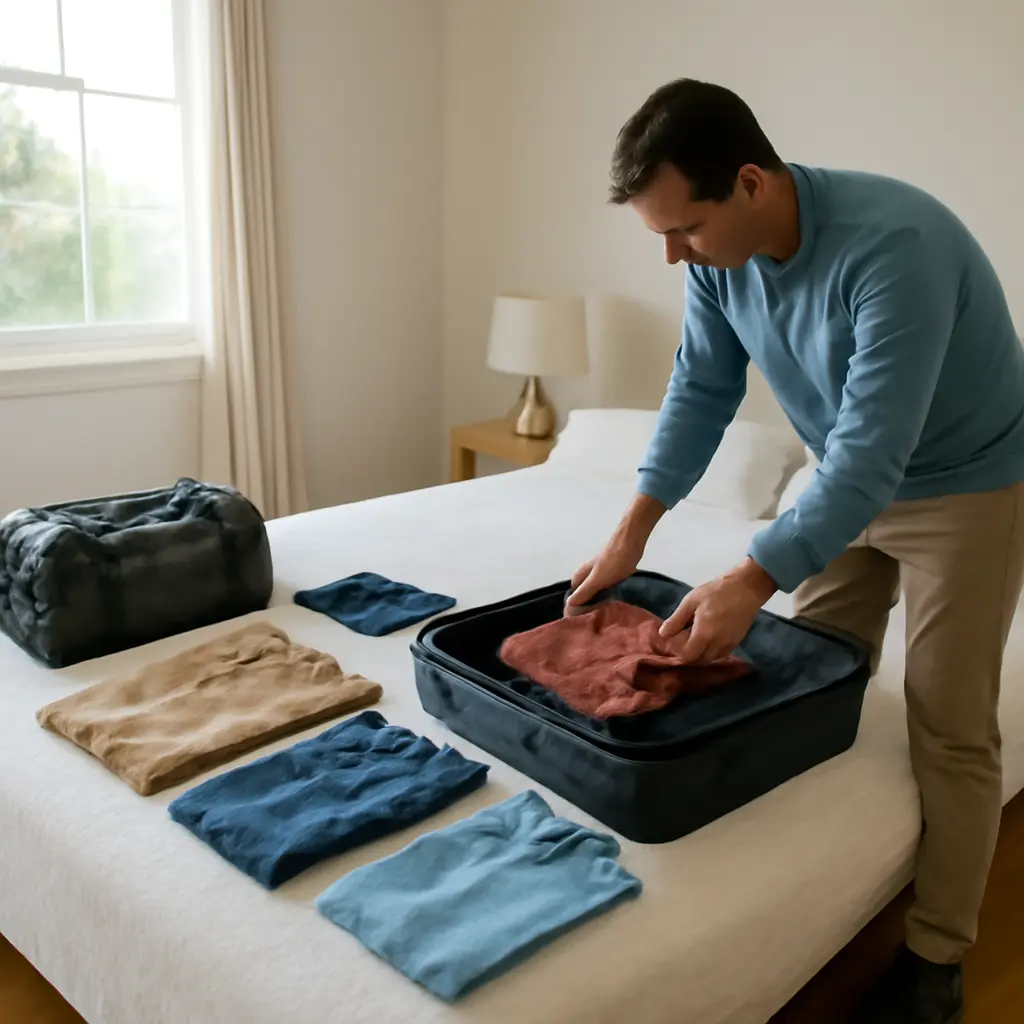
A capsule wardrobe is a coordinated set of clothes that can be combined into multiple outfits. For a short coastal trip, consider one linen shirt, one linen or cotton bottom, two cotton tops, a versatile dress or jumpsuit, and a light layer, adjusting the quantities for trip length and laundry access. Choose a simple color palette so that pieces mix easily, and reserve technical swimwear for repeated water use.
- Wear the bulkiest comfortable layer during travel.
- Roll soft cotton basics and fold structured linen pieces loosely to limit hard creases.
- Place clean, dry clothes apart from swimwear and damp items.
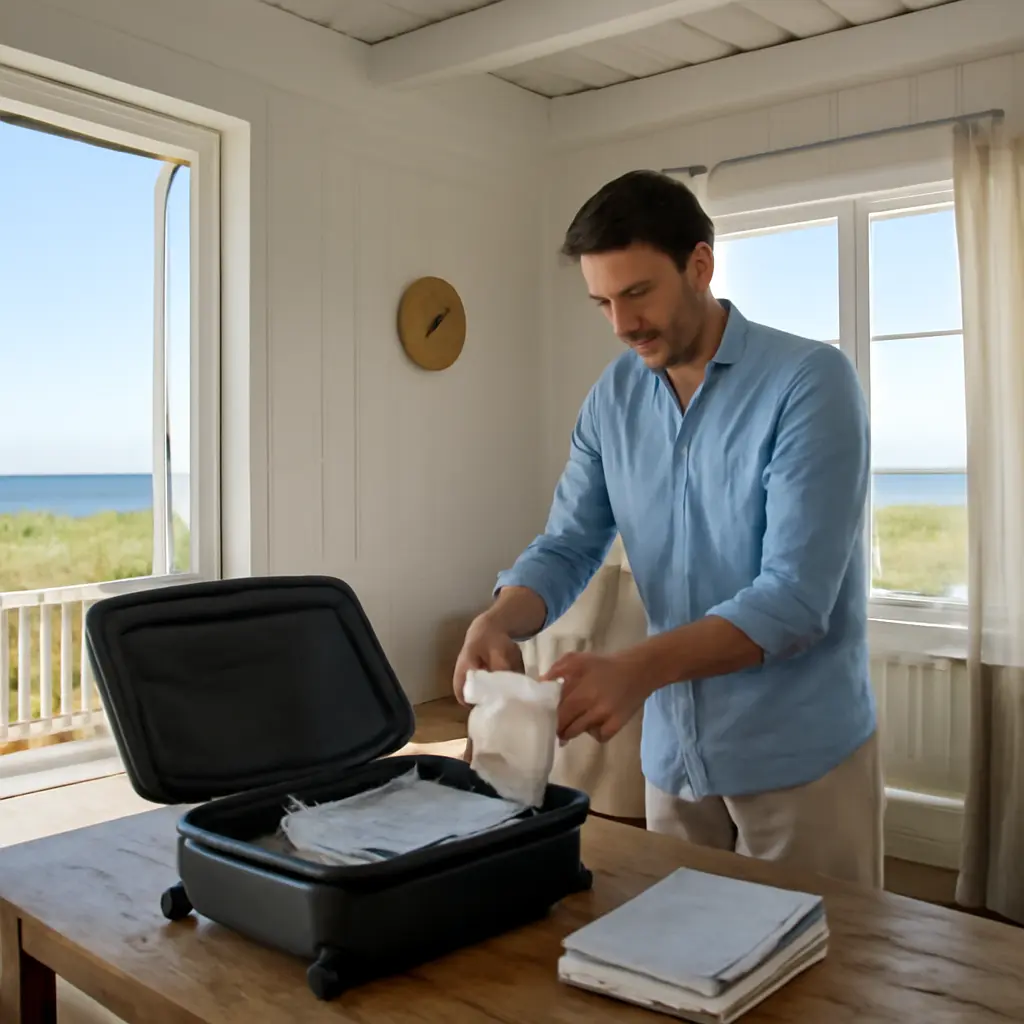
- Pack a small laundry bag and check care labels before washing garments away from home.
Wrinkle and Laundry Planning
Wrinkle management is part of choosing linen, not a reason to avoid it. Unpack and hang linen soon after arrival; bathroom steam may soften light creases, but it is not a guaranteed replacement for ironing. Cotton can wrinkle too, particularly in lightweight woven fabrics. Before washing, sort by color and follow the label, since garment dyes, trims, and finishes can require special care.
For humid destinations, plan around drying conditions. Leave space between damp garments, use a ventilated area, and avoid packing clothing while it is still wet. If you expect repeated swims or a tight turnaround between activities, include a quick-drying performance garment rather than relying exclusively on linen and cotton.
A Practical Linen-and-Cotton Packing Checklist
The best balance depends on trip length, forecast, activities, and personal comfort. Use this checklist as a starting point, then adjust it rather than treating the quantities as a universal rule.
- Choose breathable daytime clothes in light or medium weights.
- Pack linen if you like an airy feel and are comfortable with natural creasing.
- Pack cotton basics for softness and outfit flexibility, while considering fabric weight.
- Bring swimwear and a separate cover-up; do not depend on everyday clothes to dry quickly after swimming.
- Add a light wind layer for cooler evenings and exposed waterfronts.
- Check the destination forecast, laundry options, and each garment’s care label.
As a simple comparison chart, think of linen as a strong choice for airy, relaxed daytime outfits; cotton as a flexible choice for soft basics and varied garment types; and quick-drying technical fabric as a useful complement for repeated water activities. This is a qualitative guide, not a laboratory performance ranking: weave, weight, fit, humidity, and care can change how each garment feels and performs.
Conclusion: Pack for the Weather, Not Just the Fabric
Linen and cotton each have a place in coastal getaway packing. Linen offers a naturally textured, airy option for warm-weather outfits, while cotton’s wide range of weights and styles makes it an adaptable choice for everyday wear. Neither fabric is automatically ideal for every beach, humid night, or swim; garment construction, weather, care, and itinerary matter just as much.
Start with the forecast and activities, build a small set of mix-and-match pieces, and make room for a practical layer and swimwear. For more informed choices, compare fiber-content and care labels and consult local weather guidance before you travel.
Sources: U.S. Department of Agriculture, “Flax,” National Agricultural Library, https://www.nal.usda.gov/farms-and-agricultural-production-systems/flax; Federal Trade Commission, “Threading Your Way Through the Labeling Requirements Under the Textile and Wool Acts,” https://www.ftc.gov/business-guidance/resources/threading-your-way-through-labeling-requirements-under-textile-wool-acts; National Oceanic and Atmospheric Administration, “Relative Humidity,” https://www.noaa.gov/jetstream/synoptic/relative-humidity; U.S. Food and Drug Administration, “Sun Protective Clothing,” https://www.fda.gov/radiation-emitting-products/tanning/sun-protective-clothing; U.S. Environmental Protection Agency, “Reducing and Reusing Basics,” https://www.epa.gov/recycle/reducing-and-reusing-basics